 HUATAO
Eurokey’s Corby Opening: What to Check Between Plastic Packaging Sorting and Recycling
How recyclers can specify incoming material and verify size-reduction equipment and spare parts when sorting and recycling take place at different sites.
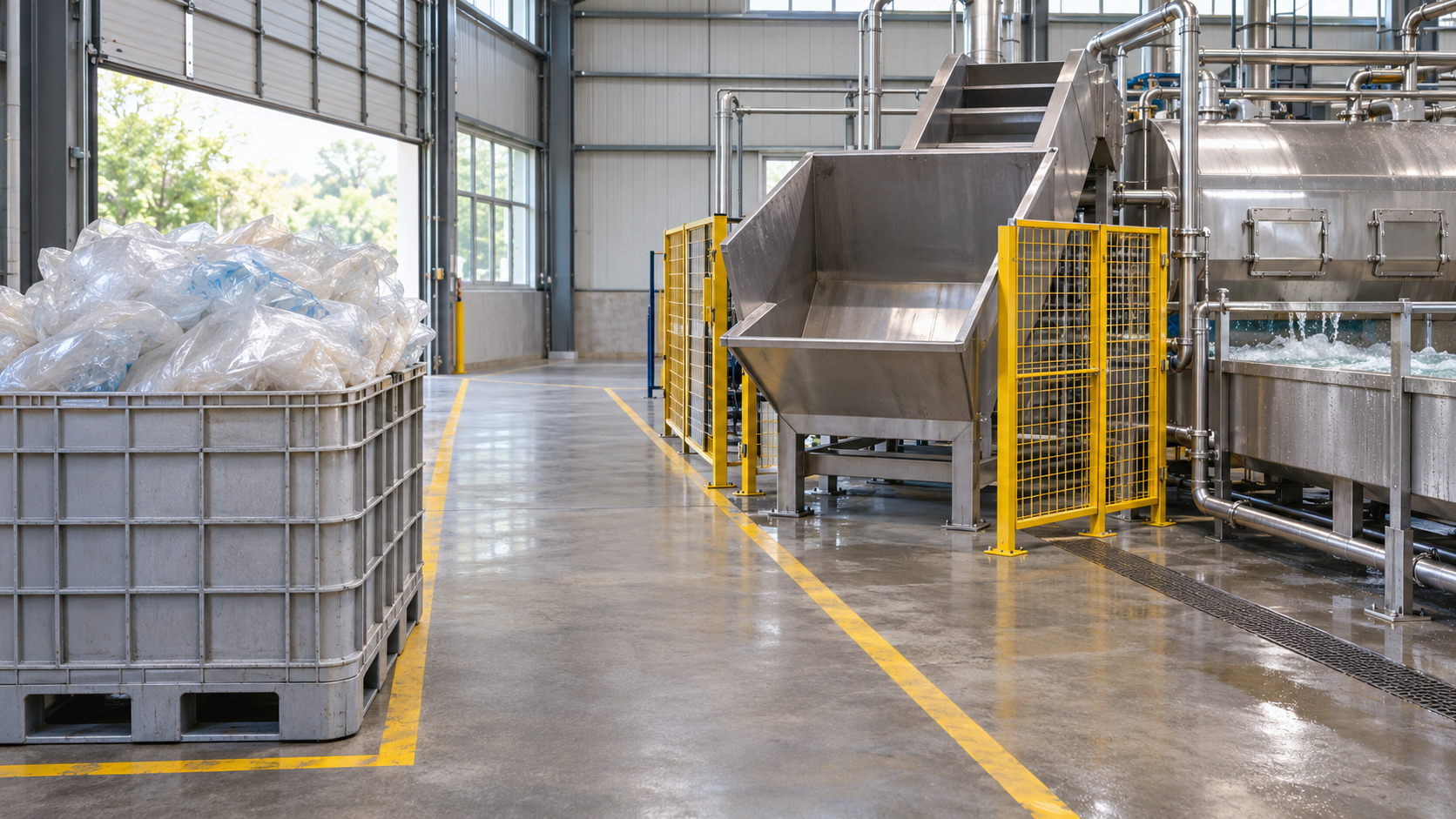
On 13 November 2026, Reconomy announced the official opening of Eurokey’s plastic recycling facility in Corby, Northamptonshire. Eurokey sorts used retail transit packaging in nearby Kettering and sends the sorted plastic to Corby for washing and conversion into pellets. Reconomy says Corby can recycle 38,000 tonnes of plastic a year. That figure describes the site’s stated capacity. The announcement does not specify the physical form of the transferred material, where size reduction takes place, which machines are installed or whether any equipment or spare parts are being sought.
Agree what the receiving plant will accept
When sorting and recycling take place at separate sites, agree whether the receiving team will get bales, loose material or pre-cut plastic. Specify the accepted material mix and contamination limits, how loads will be sampled and who decides whether an out-of-spec load can be accepted. For pre-cut material, agree on the particle-size range and how to measure oversize. For bales, confirm bale dimensions, weights and how the receiving site will open and feed them.
Locate any size-reduction step before specifying equipment
Trace a representative load from sorting discharge to wash-line infeed. Confirm whether material is cut at the sorting site, at the receiving site or by a third party. If a size-reduction stage is required, compare the feed form and peak delivery rate with what the machine can accept. Then check that its discharge size and peak output match the next stage’s needs. Use measured operating data and representative feed samples where available.
Confirm who owns the spare-parts decision
Where a shredder or granulator is confirmed, record its make, model, serial number and cutting configuration. Check the applicable knife and screen references against current drawings or parts records. Identify which site or service contractor owns the maintenance schedule, holds stock and orders replacements. Review lead times against planned shutdowns and the stock needed to restart after a part change.
Sources
Discuss your project
Share your material, target output or the equipment you want to compare.