 HUATAO
PET Recycling Procurement: What to Check for Whole Bottles and Purchased Flakes
A procurement guide to defining PET feedstock at the receiving point and requesting comparable quotes for size-reduction wear parts.
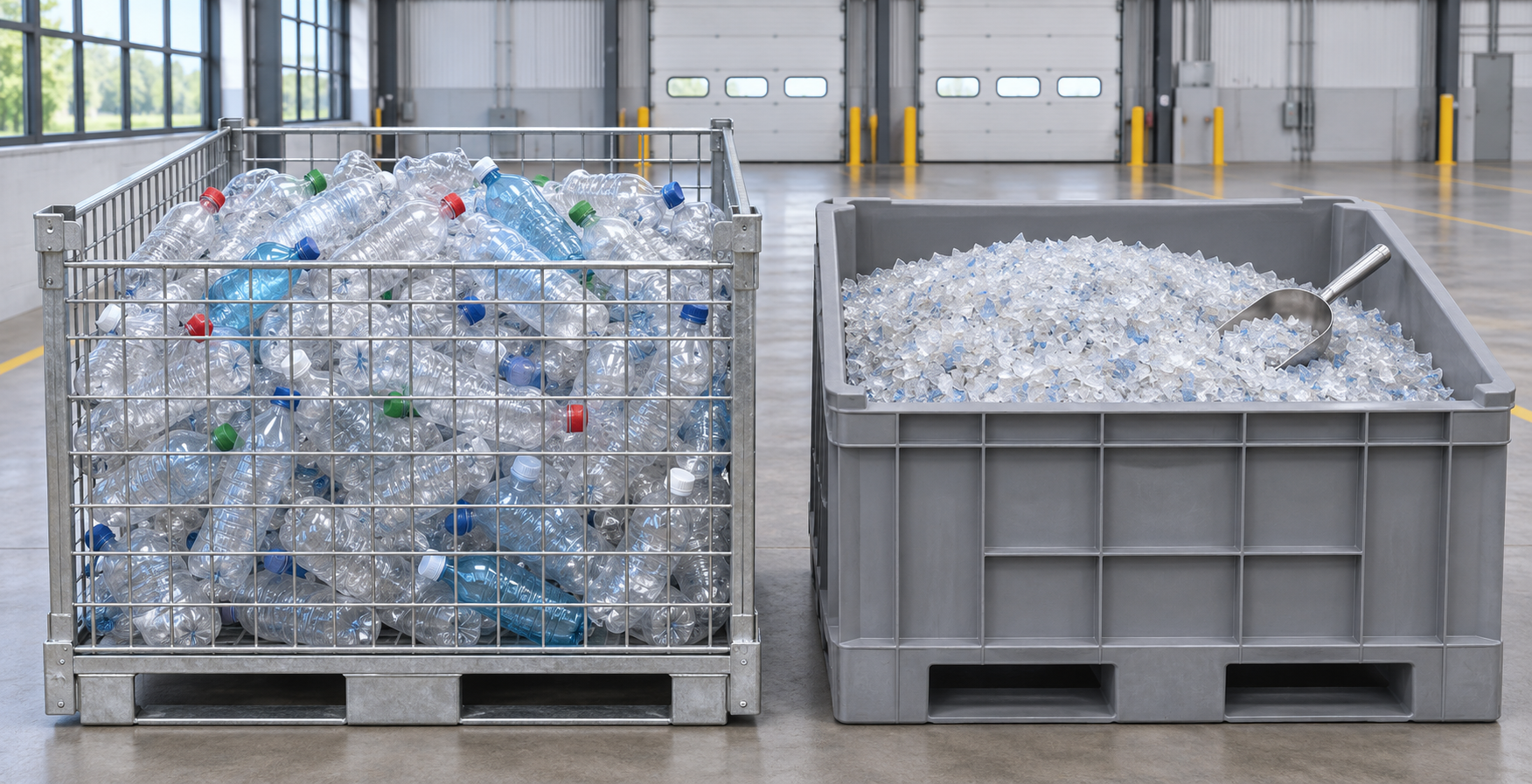
Polysmart Packaging commissioned the first phase of its recycling expansion in Mowe, Ogun State, Nigeria, on 29 October 2026, according to investor Aruwa Capital Management. Aruwa said that phase included the first stage of Polysmart’s food-grade recycled PET expansion. The announcement leaves open the feed form at the new line’s receiving point, the location and configuration of any size-reduction step, and any purchasing plans. Those details are the starting point for a buyer assessing a similar project.
If the plant receives whole PET bottles
Confirm whether bottles arrive baled or loose, what the loads typically contain and what the receiving site accepts. Document bale dimensions where relevant, the range of bottle sizes, and limits for non-PET containers, labels, caps and other contaminants. Identify who opens, sorts and cuts the bottles and where each step happens. If cutting takes place on site, confirm the expected feed rate, required output size and the limits of the next processing stage before specifying a machine or requesting wear-part quotes.
If the plant buys PET flakes
Define the flake specification at delivery. Agree on particle-size distribution, allowable fines and oversize, moisture and contamination limits, and how the buyer will sample each lot. Confirm whether the supplier delivers flakes ready for the next process or whether the buyer needs additional screening or regrinding. That decision determines which equipment belongs in the project scope and which wear parts the site may need to stock.
What to send with a spare-parts enquiry
For an installed shredder or granulator, send the make, model, serial number and cutting configuration. Include the OEM part reference or a drawing, the required quantity and delivery date, and photos showing the part, its mounting points and its wear pattern. For a screen, confirm the opening size and overall dimensions against the current specification. Ask suppliers to state the part reference, material specification, lead time and any information they still need to confirm fit. For a new line, confirm the machine and configuration with the equipment supplier before ordering fit-specific spares.
Sources
Discuss your project
Share your material, target output or the equipment you want to compare.