 HUATAO
Aliplast Opens R3GID in Modena: What to Check on a Rigid Plastics Recycling Line
What to verify about feedstock, shredder output and spare parts when specifying a rigid plastics recycling line.
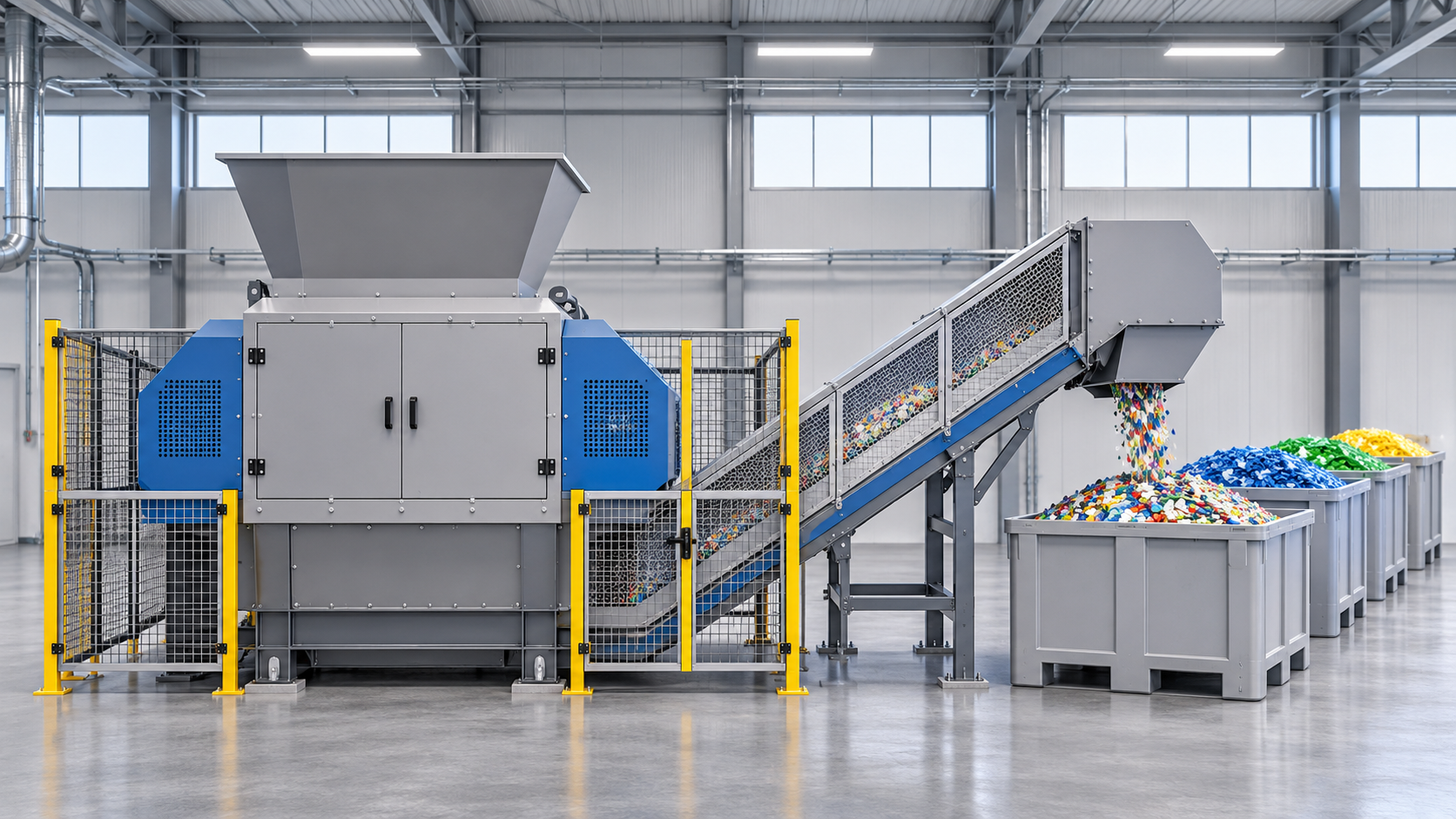
Aliplast inaugurated its R3GID rigid plastics recycling facility in Modena, Italy, on 20 October 2026. The company reports that the facility can process up to 30,000 tonnes of polymers annually and accepts rigid plastics from municipal and industrial sources. That figure describes the facility's stated capacity. For a buyer planning a separate line, the equipment specification starts with representative feed samples, the required discharge and the conditions under which each will be tested.
Describe the incoming material before setting a throughput target
Record the typical and largest pieces, polymer mix, moisture, dirt and metal contamination. Note whether the feed includes crates, moulded housings, thick offcuts or hollow parts. Supply representative samples from normal and difficult lots, and agree which materials are excluded from the test.
Match shredder output to the next process
Ask for a measured particle-size distribution, including oversize and fines, from the agreed feed. Confirm what the downstream conveyor, sorting stage or wash line can accept. If a screen is proposed, record the opening and geometry alongside the measured output. Include both sustained throughput and short discharge peaks in the acceptance criteria.
Identify cutters, counter-knives and screens before ordering spares
Use the machine serial number, parts list and revision-controlled drawings to verify fit. Record cutter and counter-knife dimensions, the mounting pattern and the specified material. For screens, confirm the opening, thickness and mounting details. Request lead times for the parts that could delay a restart and agree how replacement parts will be checked at receipt.
Write the operating assumptions into the acceptance test
Agree on feed composition, run duration, how output is weighed and how downtime is counted. Record energy use and product quality at the agreed operating point if these metrics form part of the purchase decision. A repeatable test gives maintenance and purchasing teams a reference when feed conditions or wear parts change.
Sources
Discuss your project
Share your material, target output or the equipment you want to compare.